WE SHIP NATIONWIDE ACROSS THE UNITED STATES AND CANADA. SPEAK TO AN EXPERT: 708-400-7000

2 days ago

Single-Zone vs. Multi-Zone Mini Split Systems: What Should You Buy?

You've decided a ductless mini split might be a good fit for your home. Now comes another decision. Do you need a single-zone system, or would a multi-zone setup make more sense?


If you're heating and cooling one room, the answer may be fairly simple. But if you're dealing with several bedrooms, a finished basement, or areas of the house that never seem to stay comfortable, there's more to consider.


The main difference between single-zone and multi-zone mini split systems is how many indoor units connect to the outdoor equipment. That sounds straightforward, but the number of rooms you want to condition doesn't necessarily tell you which system to buy.


Understanding how these systems work, especially how they handle different heating and cooling demands, can help you avoid buying equipment that doesn't fit your needs.

Single Zone vs Multi Zone Mini Split: What's the Difference?

A single-zone mini split has one outdoor unit connected to one indoor unit. It's used to heat or cool a particular room or area without relying on traditional ductwork.


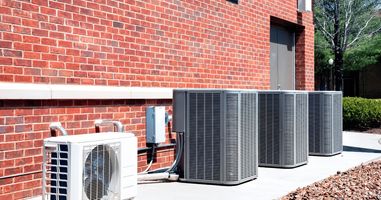
A multi-zone mini split connects several indoor units to one outdoor unit. Each indoor unit serves a separate area, so you can set different temperatures in different rooms.


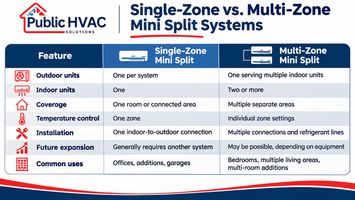
For example, a single-zone system might work well for a home office that gets too hot in the afternoon. A multi-zone system could serve three bedrooms, each with its own indoor unit and temperature setting but a multi-zone system isn't automatically better because it serves more rooms. In some homes, installing two separate single-zone systems may actually be the more practical option. Here's a quick comparison:

Comparing single-zone and multi-zone mini split systems, including indoor and outdoor units, room coverage, temperature control, installation, and expansion options.Comparing single-zone and multi-zone mini split systems, including indoor and outdoor units, room coverage, temperature control, installation, and expansion options.

When a Single-Zone Mini Split Makes Sense

Let's say the central air conditioning works fine throughout most of your house, but the finished room above your garage is always uncomfortable. You probably don't need to replace or modify your entire HVAC system just to address that one space. A single-zone mini split may be able to handle the room independently. They're commonly used in home offices, finished basements, garages, additions, and other areas where extending existing ductwork isn't practical.


A single-zone system also has a relatively straightforward equipment arrangement. One indoor unit connects to one outdoor unit, and the system's capacity is dedicated to that space. There are situations where installing multiple single-zone systems makes sense, too.


Suppose you're conditioning a detached garage and a bedroom on the opposite side of the house. Connecting both to one outdoor unit might require long refrigerant lines and a more complicated installation. Separate systems could be worth considering.


The biggest limitation is that one indoor unit generally can't maintain consistent temperatures throughout several enclosed rooms. A unit installed in the hallway isn't likely to keep three bedrooms equally comfortable when their doors are closed. If you're addressing one specific area, you can explore the single-zone mini split systems available through Public HVAC Solutions.

When a Multi-Zone Mini Split Is a Better Fit

Multi-zone systems become worth considering when you want to heat or cool several separate rooms without installing an outdoor unit for each one.


Think about a house with three bedrooms. One gets afternoon sun and heats up quickly. Another stays relatively cool, while the third is used only occasionally. With a multi-zone mini split, each bedroom can have its own indoor unit and temperature setting. All three connect to the same outdoor equipment.

This arrangement can be useful when outdoor space is limited or you simply don't want multiple outdoor units around the property.


But there's a catch that buyers sometimes miss. The outdoor unit has to support the connected indoor units, and that doesn't mean every indoor unit will always be able to operate at its full rated capacity at the same time.


A multi-zone installation can also involve longer refrigerant lines, additional electrical connections, and more complicated placement decisions. Those details can affect installation costs, especially in larger homes or buildings with rooms spread across different floors.

Why Counting Rooms Isn't Enough

It's tempting to start shopping by counting how many rooms need heating or cooling. Three rooms? Buy a three-zone system. Unfortunately, it doesn't always work that way.


Consider an open kitchen and living room. Even though they're technically two rooms, one properly sized indoor unit might be able to condition the connected space.


Now compare that with three bedrooms separated by a hallway. Each bedroom may need its own indoor unit because air won't circulate freely between the rooms, particularly when the doors are closed.

The heating and cooling requirements can also vary quite a bit.


A small bedroom with large west-facing windows may need more cooling than you'd expect. A larger room with good insulation and limited sun exposure might have a lower cooling load.


Ceiling height, insulation, window area, air leakage, and local weather all affect the amount of heating and cooling a room needs. Before deciding how many indoor units to purchase, have an HVAC professional calculate the heating and cooling requirements for each area. Square footage alone won't give you the complete answer.

How Does a Multi-Zone System Handle Different Room Temperatures?

This is where equipment selection gets a little more technical. Imagine a home with three bedrooms, each equipped with a 9,000 BTU/h indoor unit. Together, those units have a combined nominal capacity of 27,000 BTU/h.


You might assume you need an outdoor unit rated for exactly 27,000 BTU/h but not necessarily as multi-zone equipment is built around approved combinations of indoor and outdoor units. The combined ratings of the indoor units don't always match the outdoor unit's nominal capacity.


How much heating or cooling each room actually receives depends on the equipment combination, operating conditions, and how much capacity the other rooms are requesting. Now imagine it's a hot afternoon and all three bedrooms need significant cooling. The outdoor unit has to handle that combined demand.


Later that night, only one bedroom may need cooling. The equipment also needs to operate effectively when demand is much lower. That's why it's worth asking your installer about both the maximum and minimum operating capacities of the system. Simply adding together the BTU ratings of several indoor units isn't enough to determine which outdoor unit to purchase.

Three Mistakes That Can Lead to Buying the Wrong Mini Split

Assuming One Indoor Unit Can Handle Several Bedrooms


A mini split doesn't distribute air the same way a central HVAC system with ductwork does. Most of the conditioned air stays in the room or connected area where the indoor unit is installed.


If you're planning to put one unit in a hallway and leave bedroom doors open so the air can circulate, you may find that some rooms stay warmer or cooler than others. Room layout and airflow matter. Don't assume one indoor unit can handle several enclosed spaces just because the combined square footage seems reasonable.


Buying Indoor and Outdoor Units That Aren't Compatible


Not every mini split indoor unit works with every outdoor unit. Even equipment with the same brand name or similar BTU ratings may have different communication requirements, refrigerant specifications, or approved configurations.


This is particularly important with multi-zone systems, where several indoor units must work with the same outdoor equipment. Before purchasing components separately, have your installer verify the exact model combinations.


Assuming Multi-Zone Systems Always Cost Less


Buying one outdoor unit instead of two or three sounds like it should save money but sometimes, the cost of a multi-zone outdoor unit, additional refrigerant piping, electrical work, and installation labor can narrow or eliminate that difference.


The layout of the building also matters. Running refrigerant lines to three rooms on the same side of a house is a different project than connecting rooms on separate floors or opposite ends of the building. Compare the total installed cost of both options, not just the price of the equipment.


Can You Add Another Zone Later?

It's a reasonable question, especially if you're finishing a basement or planning another room addition in the future. Some multi-zone outdoor units can support additional indoor units, but having an unused connection doesn't automatically mean you can add another room whenever you want.


The outdoor unit must have an approved configuration that supports the additional indoor unit. Capacity limits, compatible models, and refrigerant piping requirements all come into play.


If you think you may want another zone in the next few years, tell your installer before buying the equipment. That information may change which system makes the most sense now. Otherwise, you could end up purchasing an outdoor unit that can't accommodate the expansion you had planned.

What to Ask Your Installer Before Ordering

Once you have a general idea of which configuration you prefer, it's time to work through the actual equipment requirements. Bring these questions to your HVAC technician before purchasing:


• How many separate zones does my home actually need?

• What size indoor unit is appropriate for each room?

• Will the outdoor equipment support all the indoor units during periods of high demand?

• Which indoor and outdoor models are approved to work together?

• Where should the outdoor unit and refrigerant lines be installed?

• Would two single-zone systems make more sense than one multi-zone setup?

• If I'm using the system for heating, how will it perform during our coldest weather?


Your installer should also confirm electrical requirements, refrigerant compatibility, condensate drainage, and any installation limitations. It's much easier to address these questions before ordering than after the equipment arrives.

So, Should You Buy a Single-Zone or Multi-Zone Mini Split?

If you need to heat or cool one room, a single-zone system is often the simplest place to start. If several separate rooms need individual temperature control, a multi-zone system may be a good fit. Just don't assume that sharing one outdoor unit automatically makes it the less expensive or more efficient choice.


Sometimes multiple single-zone systems make more sense, especially when rooms are far apart or have very different heating and cooling needs.


The decision isn't really about how many rooms you have. It's about how those rooms are used, how much heating and cooling they require, and what equipment can serve them effectively.


Once your HVAC installer has confirmed the sizing and configuration, you can shop HVAC systems at Public HVAC Solutions and compare equipment options for your project.

Let’s create what matters — together.

More Posts

Heat Pump vs. Air Conditioner: What Changes When You're Replacing an Existing System?Heat Pump vs. Air Conditioner: What Changes When You're Replacing an Existing System?
Heat Pump vs. Air Conditioner: What Changes When You're Replacing an Existing System?

Your air conditioner is getting old, repairs are becoming more frequent, and you're starting to look at replacement equipment. While comparing prices online, you notice that heat pumps look a lot like central air conditioners. Some even have similar efficiency ratings and cooling capacities.


So why not replace your existing AC with a heat pump?


You certainly can in many homes. But before ordering one, it's worth understanding what you're actually changing.


The biggest difference in the heat pump vs. air conditioner decision isn't the outdoor unit. It's what happens to the rest of your heating and cooling system.

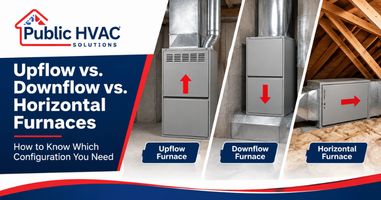
Upflow vs. Downflow vs. Horizontal Furnaces: How to Know Which Configuration You NeedUpflow vs. Downflow vs. Horizontal Furnaces: How to Know Which Configuration You Need
Upflow vs. Downflow vs. Horizontal Furnaces: How to Know Which Configuration You Need

Shopping for a replacement furnace can get confusing once you start comparing models. Two furnaces may have similar heating capacities and efficiency ratings, but one is listed as upflow, another as downflow, and a third as multi-position.


What's the difference, and does it matter which one you buy?


Quite a bit, actually. The terms describe how air moves through the furnace and how the equipment can be positioned during installation. Choosing between an upflow vs downflow furnace often comes down to where the existing ductwork connects and how the equipment fits into the available space.


Here's how to tell these configurations apart and what to check before purchasing a furnace.

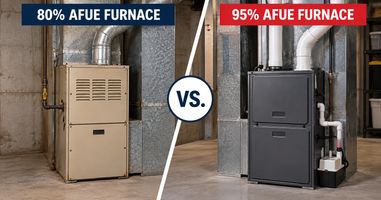
80% vs. 95% AFUE Furnace: What to Compare Before Buying80% vs. 95% AFUE Furnace: What to Compare Before Buying
80% vs. 95% AFUE Furnace: What to Compare Before Buying

If you're replacing a gas furnace, you may quickly run into two common efficiency ratings: 80% AFUE and 95% AFUE. At first glance, comparing an 80 vs 95 furnace seems simple. The 95% model uses more of the fuel it consumes to heat the home.


That difference matters, but efficiency is only part of the buying decision.


An 80% and a 95% furnace can differ in how gases are vented, if drainage is required, and what changes may be needed during installation. Your existing furnace setup can have a major influence on which option makes sense for a replacement.

R-454B vs. R-410A: What Changes When Replacing HVAC Equipment?R-454B vs. R-410A: What Changes When Replacing HVAC Equipment?
R-454B vs. R-410A: What Changes When Replacing HVAC Equipment?

Replacing an air conditioner used to start with familiar questions about tonnage, efficiency, electrical requirements, and equipment compatibility. Now there is another specification that deserves attention before anything is ordered: refrigerant.


The transition from R-410A to lower-global-warming-potential refrigerants such as R-454B has created some understandable confusion. An existing R-410A system does not automatically need to be replaced just because newer equipment uses another refrigerant. At the same time, an R-454B condenser should not be treated as a direct substitute for an R-410A condenser.


Understanding R-454B vs R-410A is especially important when only one major HVAC component has failed.

How to Read Your HVAC Nameplate Before Shopping for Replacement EquipmentHow to Read Your HVAC Nameplate Before Shopping for Replacement Equipment
How to Read Your HVAC Nameplate Before Shopping for Replacement Equipment

Shopping for replacement HVAC equipment is much easier when you know exactly what is already installed. One of the best places to start is the equipment nameplate.


If you're trying to read an HVAC nameplate, you do not need to understand every number printed on it. Your first job is simply to find the plate, take clear pictures, and identify a few useful pieces of information such as the manufacturer, model number, refrigerant, electrical requirements, and capacity-related details.


Those details can help an HVAC professional or equipment supplier understand what you currently have. They can also reduce the risk of shopping for equipment based only on square footage, tonnage, or a partial model number.

What Is an AHRI Matched HVAC System, and Why Does Matching Matter?What Is an AHRI Matched HVAC System, and Why Does Matching Matter?
What Is an AHRI Matched HVAC System, and Why Does Matching Matter?

Shopping for a new central air conditioning system can look straightforward at first. You need a certain tonnage, so you find a condenser with that capacity, pair it with an indoor coil of the same general size, and you should have a complete system.


Not necessarily.


Split HVAC equipment is made up of components that operate together. The fact that two pieces of equipment are both labeled 3 ton, for example, does not prove that they are a certified combination. An AHRI matched system gives buyers another piece of information. It identifies a specific combination of indoor and outdoor equipment whose performance has been certified together.


Understanding that distinction is useful before buying a condenser, coil, furnace, air handler, or complete matched AC system.

Can You Replace Just the Outside AC Unit? What Homeowners Need to KnowCan You Replace Just the Outside AC Unit? What Homeowners Need to Know
Can You Replace Just the Outside AC Unit? What Homeowners Need to Know

If your central air conditioner’s outdoor unit fails, replacing the entire cooling system may seem like the obvious next step. But that is not always necessary.


In some situations, you can replace the outside AC unit and continue using the existing indoor equipment. The important part is determining whether the new condenser can properly work with the evaporator coil, furnace or air handler, refrigerant, controls, and other components already in place.


That means a condenser-only replacement should not be based on tonnage alone. Before ordering equipment, the complete system needs to be evaluated.

What Size HVAC System Do I Need? What Size HVAC System Do I Need?
What Size HVAC System Do I Need?

If you're replacing an air conditioner or shopping for a new HVAC system, one of the first questions is usually, “What size HVAC system do I need?”


Square footage can help you begin narrowing your options, but it cannot give you the final answer by itself. The same is true of the tonnage printed on your existing air conditioner. Both are useful pieces of information, but neither tells the complete story.


For residential cooling, the amount of capacity a home needs depends on how much heat the home actually gains under expected conditions. Size, insulation, windows, air leakage, climate, orientation and several other characteristics can change that load.


Understanding that distinction can help you shop more intelligently before an HVAC professional confirms the final equipment selection.

What Homeowners Should Know Before Buying HVAC Equipment OnlineWhat Homeowners Should Know Before Buying HVAC Equipment Online
What Homeowners Should Know Before Buying HVAC Equipment Online

Buying heating and cooling equipment separately from installation can give homeowners more control over the purchase. It also changes who is responsible for confirming the details before the order is placed.


If you plan to buy HVAC equipment online, do not treat it like a standard appliance purchase. A furnace, air conditioner, heat pump, coil, or complete split system has to fit the home, work with the other components, meet the installation requirements, and arrive in usable condition.