WE SHIP NATIONWIDE ACROSS THE UNITED STATES AND CANADA. SPEAK TO AN EXPERT: 708-400-7000

7 hours ago

R-454B vs. R-410A: What Changes When Replacing HVAC Equipment?

Replacing an air conditioner used to start with familiar questions about tonnage, efficiency, electrical requirements, and equipment compatibility. Now there is another specification that deserves attention before anything is ordered: refrigerant.


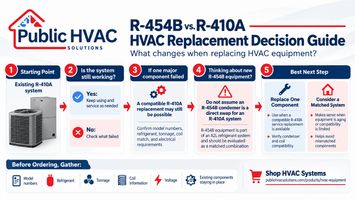
The transition from R-410A to lower-global-warming-potential refrigerants such as R-454B has created some understandable confusion. An existing R-410A system does not automatically need to be replaced just because newer equipment uses another refrigerant. At the same time, an R-454B condenser should not be treated as a direct substitute for an R-410A condenser.


Understanding R-454B vs R-410A is especially important when only one major HVAC component has failed.

Why HVAC Equipment Is Changing From R-410A

R-410A has been widely used in residential and light-commercial air conditioners and heat pumps. New federal requirements are moving newly manufactured and installed systems toward refrigerants with lower global warming potential.


For residential and light-commercial air conditioning and heat pump systems, the current refrigerant limit is a GWP below 700. R-454B falls below that threshold and is one of the refrigerants being used in newer equipment.


That does not mean existing R-410A air conditioners suddenly became unusable. Existing R-410A systems can continue operating and can still be repaired. Replacement components for servicing existing systems may also continue to be available. The distinction buyers need to understand is between repairing an existing R-410A system and creating a new system using older refrigerant technology.


That difference becomes particularly important after a condenser, evaporator coil, or other major component fails.

R-454B vs R-410A Is More Than a Refrigerant Swap

A common assumption is that changing refrigerants is similar to changing brands of oil or replacing one compatible fluid with another.


HVAC refrigerants do not work that way. R-454B and R-410A are used in equipment engineered for their respective refrigerants. R-454B is also classified as an A2L refrigerant, meaning it has different flammability characteristics than R-410A and is subject to equipment and installation requirements appropriate for that refrigerant.


An existing R-410A system generally cannot simply be drained and refilled with R-454B. Likewise, finding an R-454B outdoor unit with the same tonnage as an older R-410A condenser does not establish compatibility.


The outdoor unit, indoor coil, metering components, controls, refrigerant circuit, and other system details need to be evaluated as a complete combination.

AC refrigerant replacement guideAC refrigerant replacement guide

What Happens if an R-410A Condenser Needs Replacement?

This is where the refrigerant transition becomes a real purchasing issue.


Suppose a home has an R-410A split air conditioning system and the outdoor condenser fails while the furnace and indoor coil are still usable. The owner may start shopping for an R-410A condenser replacement rather than replacing the entire HVAC system.


Repair of an existing R-410A system is still permitted. R-410A condensing units manufactured for servicing existing systems can continue to be sold and used for that purpose. Components manufactured after the applicable transition date must be identified for servicing existing equipment.


That can make component replacement a practical option in some situations.


The important part is verifying more than the refrigerant label. The replacement condenser still has to be compatible with the indoor coil and the rest of the system. Capacity, metering, electrical requirements, efficiency configuration, manufacturer-approved combinations, and other specifications can affect whether the equipment can operate together properly.


An R-410A label alone does not make two units interchangeable.

Can You Replace an R-410A Condenser With an R-454B Condenser?

Don't assume so. New R-454B HVAC equipment is engineered around that refrigerant and the requirements associated with an A2L system. Mildly flammable refrigerants such as R-454B are not intended to be installed in equipment that was not designed for them.


That means replacing only the outdoor R-410A condenser with an R-454B condenser while leaving an older R-410A indoor coil in place is not a simple refrigerant conversion. In many cases, moving to new refrigerant equipment changes the project from a single-component replacement into a larger system-matching decision.


That is why buyers should identify the refrigerant used by every component that will remain before ordering replacement equipment.

When a Matched System May Make More Sense

A failed component does not automatically mean everything needs to be replaced.


If a compatible R-410A replacement component is available and the remaining equipment is appropriate to keep in service, replacing only the failed component may still be possible.


Other situations may point toward replacing more of the system. Examples include an older indoor coil that cannot be properly matched to available equipment, multiple aging components, or a planned move to newer R-454B equipment.


A matched HVAC system can reduce some of the uncertainty because the major components are selected to work together rather than being pieced together based only on tonnage or cabinet size.


For buyers comparing individual components, refrigerant should now be treated as one of the first compatibility checks rather than something addressed after the equipment is purchased.

What to Check Before Ordering Replacement HVAC Equipment

If you are replacing equipment during the HVAC refrigerant change, collect the system information before choosing a condenser or coil.

Useful details include:


• Complete model numbers for the existing condenser, coil, furnace, or air handler

• Refrigerant listed on the existing equipment

• Nominal cooling capacity or tonnage

• Indoor coil model and configuration

• Metering device information, when applicable

• Voltage and electrical requirements

• Equipment dimensions and available installation space

• Existing components that will remain in place

• Model numbers of the replacement equipment being considered


The model numbers of the replacement equipment being considered

A photo of each equipment nameplate can be particularly useful. Avoid selecting equipment based only on descriptions such as "3-ton AC," "R-410A condenser," or "R-454B coil." Those details narrow the options, but they do not confirm that the components belong together.


Have the complete equipment combination reviewed by a qualified HVAC professional before ordering.

Does an Existing R-410A System Need to Be Replaced Now?

No. The refrigerant transition does not require homeowners or building owners to remove working R-410A systems.


Existing systems can continue to operate and be serviced during their useful lives.


That matters because the best decision after a failure depends on the specific system. A relatively serviceable system with a compatible replacement component available presents a different situation from an older system where both the indoor and outdoor equipment are approaching replacement.


The refrigerant change adds another factor to that decision. It does not create one universal answer.

What Contractors and Equipment Buyers Should Expect

For contractors, property owners, and homeowners, the biggest practical change is the need to pay closer attention to refrigerant generation during replacement work.


The phrase R-410A replacement can now mean two very different things. It may mean finding a service component for an existing R-410A system, or it may mean replacing an older system with new equipment that uses a lower-GWP refrigerant such as R-454B.


Those projects should not be approached the same way.


Confirm which components are staying, which are being replaced, what refrigerant each component is designed to use, and whether the proposed combination is approved for use together.

Shop Replacement HVAC Equipment With Compatibility in Mind

The key difference in the R-454B vs R-410A discussion is not simply which refrigerant is newer. It is how the refrigerant affects the equipment that can be used together.


An existing R-410A system may still be repaired. A move to R-454B equipment may require additional components to change as part of a properly matched system. The exact answer depends on the equipment already installed and what is being replaced.


Before ordering, gather the existing model numbers and refrigerant information and have the proposed equipment combination confirmed.

Let’s create what matters — together.

More Posts

How to Read Your HVAC Nameplate Before Shopping for Replacement EquipmentHow to Read Your HVAC Nameplate Before Shopping for Replacement Equipment
How to Read Your HVAC Nameplate Before Shopping for Replacement Equipment

Shopping for replacement HVAC equipment is much easier when you know exactly what is already installed. One of the best places to start is the equipment nameplate.


If you're trying to read an HVAC nameplate, you do not need to understand every number printed on it. Your first job is simply to find the plate, take clear pictures, and identify a few useful pieces of information such as the manufacturer, model number, refrigerant, electrical requirements, and capacity-related details.


Those details can help an HVAC professional or equipment supplier understand what you currently have. They can also reduce the risk of shopping for equipment based only on square footage, tonnage, or a partial model number.
What Is an AHRI Matched HVAC System, and Why Does Matching Matter?What Is an AHRI Matched HVAC System, and Why Does Matching Matter?
What Is an AHRI Matched HVAC System, and Why Does Matching Matter?

Shopping for a new central air conditioning system can look straightforward at first. You need a certain tonnage, so you find a condenser with that capacity, pair it with an indoor coil of the same general size, and you should have a complete system.


Not necessarily.


Split HVAC equipment is made up of components that operate together. The fact that two pieces of equipment are both labeled 3 ton, for example, does not prove that they are a certified combination. An AHRI matched system gives buyers another piece of information. It identifies a specific combination of indoor and outdoor equipment whose performance has been certified together.


Understanding that distinction is useful before buying a condenser, coil, furnace, air handler, or complete matched AC system.

Can You Replace Just the Outside AC Unit? What Homeowners Need to KnowCan You Replace Just the Outside AC Unit? What Homeowners Need to Know
Can You Replace Just the Outside AC Unit? What Homeowners Need to Know

If your central air conditioner’s outdoor unit fails, replacing the entire cooling system may seem like the obvious next step. But that is not always necessary.


In some situations, you can replace the outside AC unit and continue using the existing indoor equipment. The important part is determining whether the new condenser can properly work with the evaporator coil, furnace or air handler, refrigerant, controls, and other components already in place.


That means a condenser-only replacement should not be based on tonnage alone. Before ordering equipment, the complete system needs to be evaluated.

What Size HVAC System Do I Need? What Size HVAC System Do I Need?
What Size HVAC System Do I Need?

If you're replacing an air conditioner or shopping for a new HVAC system, one of the first questions is usually, “What size HVAC system do I need?”


Square footage can help you begin narrowing your options, but it cannot give you the final answer by itself. The same is true of the tonnage printed on your existing air conditioner. Both are useful pieces of information, but neither tells the complete story.


For residential cooling, the amount of capacity a home needs depends on how much heat the home actually gains under expected conditions. Size, insulation, windows, air leakage, climate, orientation and several other characteristics can change that load.


Understanding that distinction can help you shop more intelligently before an HVAC professional confirms the final equipment selection.

What Homeowners Should Know Before Buying HVAC Equipment OnlineWhat Homeowners Should Know Before Buying HVAC Equipment Online
What Homeowners Should Know Before Buying HVAC Equipment Online

Buying heating and cooling equipment separately from installation can give homeowners more control over the purchase. It also changes who is responsible for confirming the details before the order is placed.


If you plan to buy HVAC equipment online, do not treat it like a standard appliance purchase. A furnace, air conditioner, heat pump, coil, or complete split system has to fit the home, work with the other components, meet the installation requirements, and arrive in usable condition.