
WE SHIP NATIONWIDE ACROSS THE UNITED STATES AND CANADA. SPEAK TO AN EXPERT: 708-400-7000

3 hours ago

What Is an AHRI Matched HVAC System, and Why Does Matching Matter?

Shopping for a new central air conditioning system can look straightforward at first. You need a certain tonnage, so you find a condenser with that capacity, pair it with an indoor coil of the same general size, and you should have a complete system.


Not necessarily.


Split HVAC equipment is made up of components that operate together. The fact that two pieces of equipment are both labeled 3 ton, for example, does not prove that they are a certified combination. An AHRI matched system gives buyers another piece of information. It identifies a specific combination of indoor and outdoor equipment whose performance has been certified together.


Understanding that distinction is useful before buying a condenser, coil, furnace, air handler, or complete matched AC system.

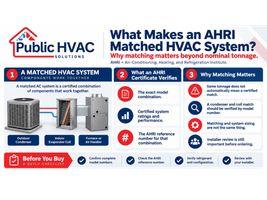
What makes an AHRI matched HVAC system?What makes an AHRI matched HVAC system?

What Does AHRI Matched System Mean?

For a split air conditioning or heat pump system, the outdoor unit is only part of the cooling system. It operates with indoor equipment, such as an evaporator coil or air handler. The Air-Conditioning, Heating, and Refrigeration Institute (AHRI) administers a certification program that verifies performance ratings for specific HVAC equipment combinations.


An AHRI matched system is a specific indoor and outdoor equipment combination that has been certified together. Instead of assuming how a condenser will perform with any coil carrying the same nominal tonnage, the certification applies to identified model combinations.


That distinction matters because efficiency and capacity ratings for a split system depend on the complete combination, not simply the nameplate information on one component.


If you are looking at a condenser and coil match, the individual model numbers are therefore more useful than statements such as "3 ton condenser" and "3 ton coil."


A 3-ton label puts equipment into a general capacity class. It does not tell you that two particular components make up a certified HVAC matched system.

What Does an AHRI Certificate Verify?

An AHRI certificate documents a certified equipment combination and its associated performance ratings. The certificate identifies the equipment models included in that combination and provides the certified ratings associated with that configuration.


This gives buyers and HVAC professionals a way to verify that the indoor and outdoor equipment being considered appear together as a certified combination.


It is especially useful because model families can include several variations. Two coils may look similar on a product page and cover overlapping nominal tonnage ranges, but the exact model numbers can result in different certified combinations.


The same applies when comparing systems advertised with a particular efficiency rating. That rating should be understood in the context of the complete equipment combination rather than assigned to an outdoor condenser without considering the indoor component.


For someone purchasing equipment online, the certificate provides a more specific point of comparison than tonnage alone.

What Is an AHRI Reference Number?

An AHRI reference number is the identifying number assigned to a certified equipment combination.


Think of it as the identifier for the combination rather than a model number for one piece of equipment.


If an HVAC system includes an outdoor condenser and an indoor evaporator coil, the reference number corresponds to the certified pairing. Depending on the configuration, other equipment information may also be relevant to the combination.


That makes the reference number useful when several similar models are being compared. Instead of asking only, "Are these both 3 ton?" you can ask a much more specific question:


Do these exact model numbers belong to the certified combination represented by this reference number?


That is a better compatibility question.

Why Matching Tonnage Alone Is Not Enough

Nominal tonnage is useful as it tells you the general cooling capacity class of the equipment but it does not establish complete compatibility. For example, an indoor coil may be marketed for a capacity range that includes a 3-ton application. An outdoor condenser may also be sold as a 3-ton unit. That still does not mean those two exact models have been certified together.


Other details can affect the equipment combination, including the specific indoor coil, blower or furnace configuration, refrigerant, airflow requirements, metering components, and equipment generation.


This is why shoppers should separate two questions that are often treated as the same thing.


First, what cooling capacity does the building need?


Second, which specific equipment combination can provide that capacity and operate together properly?


Tonnage helps answer the first question. A certified equipment match helps address the second.

A Furnace Can Matter to the Combination Too

Many residential split systems use an air conditioner with an evaporator coil installed above or alongside a gas furnace. The furnace provides heat, but its blower also moves air through the indoor coil during cooling operation.


Because of that, shopping for a "furnace, coil, and condenser package" involves more than simply selecting three products with compatible physical dimensions.


The indoor airflow available from the furnace or air handler matters to system operation. Coil configuration also matters. The exact combination should be reviewed as a system rather than as three independent purchases.


This is one reason complete equipment combinations can simplify the shopping process. You still need to confirm sizing and installation requirements, but you are starting with components selected as a set instead of independently choosing every major piece based on a few specifications.


Public HVAC Solutions offers matched HVAC systems for buyers who prefer to shop equipment combinations rather than assembling a split system one component at a time.

Can You Mix HVAC Brands or Models?

This is one of the questions that should be answered with model numbers, not assumptions.


Seeing two pieces of equipment with compatible capacity ranges does not prove they belong together. The same is true of equipment from the same manufacturer. Brand alone does not establish a certified match.


Conversely, buyers should not assume compatibility rules based simply on the logo printed on the cabinet. The useful question is whether the exact equipment combination has been verified for the intended application.


Before purchasing separate components, have the model numbers reviewed by a qualified HVAC professional. This is particularly important when replacing only part of an existing system, since older equipment may use a different refrigerant, controls, metering arrangement, or product generation than equipment currently available.

AHRI Matching Does Not Replace Proper HVAC Sizing

There is another distinction that can save buyers considerable confusion.


A certified equipment combination tells you about the relationship between the components. It does not tell you that the system is the correct size for your home or building.


You can have a properly matched 4-ton system that is still the wrong capacity for a particular property.


System sizing should be based on the heating and cooling requirements of the building rather than selecting equipment solely from square footage or the tonnage of the old unit.


Once the required capacity is known, the equipment combination can then be evaluated for compatibility and certified performance.


In other words, sizing determines how much system you need. Matching determines which components belong together. Both decisions matter.

What Should You Check Before Buying a Matched AC System?

Before ordering, gather the exact model information rather than relying on abbreviated product descriptions. Useful questions include:


• What are the complete model numbers for the condenser and indoor coil?

• Is a furnace or air handler part of the certified combination?

• Is there an AHRI reference number for the equipment combination?

• Does the certificate list the exact models you plan to purchase?

• What refrigerant does the equipment use?

• Has the required cooling and heating capacity been confirmed for the property?

• Has your installer reviewed the equipment before it is ordered?


The installer should be involved before the purchase whenever possible. Matching the equipment on paper does not replace confirming physical fit, ductwork, electrical requirements, refrigerant piping, airflow, controls, and other installation conditions at the property.

Shop the Combination, Not Just the Tonnage

An AHRI matched system gives you more information than a collection of components that happen to carry similar capacity labels. It identifies a specific equipment combination and gives buyers a way to verify the models and certified system ratings associated with it.

That makes the AHRI reference number and certificate valuable tools when comparing HVAC equipment online.


Start with proper sizing. Then compare exact model numbers and the complete system configuration rather than assuming that any condenser and coil with matching nominal tonnage belong together.


If you prefer to begin with equipment already grouped as a system, browse Matched HVAC Systems from Public HVAC Solutions or explore the broader HVAC Equipment selection.

Let’s create what matters — together.

More Posts

Can You Replace Just the Outside AC Unit? What Homeowners Need to KnowCan You Replace Just the Outside AC Unit? What Homeowners Need to Know
Can You Replace Just the Outside AC Unit? What Homeowners Need to Know

If your central air conditioner’s outdoor unit fails, replacing the entire cooling system may seem like the obvious next step. But that is not always necessary.


In some situations, you can replace the outside AC unit and continue using the existing indoor equipment. The important part is determining whether the new condenser can properly work with the evaporator coil, furnace or air handler, refrigerant, controls, and other components already in place.


That means a condenser-only replacement should not be based on tonnage alone. Before ordering equipment, the complete system needs to be evaluated.


What Size HVAC System Do I Need? What Size HVAC System Do I Need?
What Size HVAC System Do I Need?

If you're replacing an air conditioner or shopping for a new HVAC system, one of the first questions is usually, “What size HVAC system do I need?”


Square footage can help you begin narrowing your options, but it cannot give you the final answer by itself. The same is true of the tonnage printed on your existing air conditioner. Both are useful pieces of information, but neither tells the complete story.


For residential cooling, the amount of capacity a home needs depends on how much heat the home actually gains under expected conditions. Size, insulation, windows, air leakage, climate, orientation and several other characteristics can change that load.


Understanding that distinction can help you shop more intelligently before an HVAC professional confirms the final equipment selection.

What Homeowners Should Know Before Buying HVAC Equipment OnlineWhat Homeowners Should Know Before Buying HVAC Equipment Online
What Homeowners Should Know Before Buying HVAC Equipment Online

Buying heating and cooling equipment separately from installation can give homeowners more control over the purchase. It also changes who is responsible for confirming the details before the order is placed.


If you plan to buy HVAC equipment online, do not treat it like a standard appliance purchase. A furnace, air conditioner, heat pump, coil, or complete split system has to fit the home, work with the other components, meet the installation requirements, and arrive in usable condition.