WE SHIP NATIONWIDE ACROSS THE UNITED STATES AND CANADA.
HVAC Valves and Controls
Shop HVAC valves and controls for repair, replacement, and new HVAC projects. These parts manage water, fuel, or other approved media within heating and cooling systems and work with thermostats, actuators, zone controls, and related equipment. Depending on the application, you may need zone valves, control valves, actuators, or other valve control components. Specifications vary by valve function, connection size, voltage, operating method, and system requirements, so matching the part to the equipment is important before ordering.
HVAC Valves and Controls for Different Applications
Valves serve different purposes throughout an HVAC system. In hydronic heating and cooling systems, zone valves can open or close water flow to individual zones. Other control valves may regulate, isolate, or redirect flow based on system demand.
Some valves operate in a simple open-and-close position, while others work with actuators or control systems that adjust valve position as conditions change. The correct setup depends on the job the valve needs to perform and how it communicates with the rest of the system.
When comparing parts, look beyond physical size. Connection type, operating voltage, valve action, number of ports, actuator requirements, pressure ratings, and system controls can all affect compatibility.
Control Valves, Zone Valves and Actuators
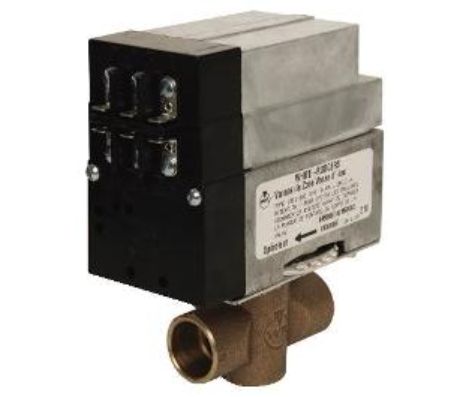
An HVAC control valve regulates flow through part of a heating or cooling system. Zone valves are commonly used in hydronic systems to control water flow to separate areas or circuits when there is a call for heating or cooling.
The actuator provides the mechanical movement that changes the valve position. On some systems, the valve and actuator are supplied as one assembly. On others, they can be serviced or replaced separately. The control system may coordinate that operation with thermostats, circulators, boilers, air handlers, or other HVAC equipment.
Valve designs vary considerably. Products may differ by normally open or normally closed operation, two-way or three-way configuration, connection style, voltage, wiring, actuator type, and approved application. Those details should be checked against the existing equipment or project specifications before selecting a replacement.
What to Check Before Buying HVAC Valves and Controls
For replacement work, start with the original part number and equipment information whenever possible. Two parts that look alike can operate differently even when the pipe size or voltage matches.
- Valve function: Confirm whether the valve is used for zoning, isolation, flow regulation, diversion, fuel control, or another purpose.
- Connection size and type: Match the pipe size along with the required threaded, sweat, press, flanged, or other connection.
- Operating voltage: Check the voltage required by the actuator or control.
- Valve action: Verify whether the system requires normally open, normally closed, two-position, or modulating operation.
- Port configuration: Determine whether the application uses a two-way, three-way, or another valve arrangement.
- Actuator and control compatibility: Confirm that the valve, actuator, thermostat, relay, or zone control are intended to work together.
- Pressure and temperature ratings: Make sure the valve is approved for the conditions found in the system.
- Model requirements: OEM equipment may call for a specific part number or approved replacement.
A matching connection does not automatically make one valve a direct replacement for another. Review the equipment documentation, wiring, original component information, and manufacturer specifications when making the selection.
Choosing the Correct Valve or Control
The type of system usually determines which valve and control arrangement makes sense. Hydronic zoning, furnace fuel control, and general electrical HVAC controls all serve different purposes and should not be treated as interchangeable categories.
In a zoned hot-water system, zone valves may work with thermostats and a central zone control to direct water only where it is needed. Other hydronic systems use circulators instead of zone valves. Larger or more complex systems may use actuated valves tied into equipment controls or building automation.
If you are specifically replacing a furnace fuel-control component, browse our Gas Valves category. For relays, transformers, pressure switches, fan controls, ignition controls, and other electrical control components, visit our broader HVAC Controls category.
HVAC Valves and Controls Shipped Nationwide
Public HVAC Solutions ships HVAC products throughout the United States and Canada. Inventory changes, so check individual product listings for current specifications, pricing, and availability.
Contractors, technicians, property owners, and facility teams can also browse our broader selection of HVAC replacement parts and HVAC parts and supplies for related repair and installation needs. When looking for a replacement valve or control, having the equipment model number, original part number, voltage, and connection information available can make the search much easier.
HVAC Valves and Controls FAQs
What is the difference between a zone valve and a zone valve control?
A zone valve is the mechanical part that opens or closes flow through a specific hydronic circuit. The zone valve control handles the electrical side of the system and coordinates calls from thermostats with the valves and other equipment.
Depending on the system, the control may also communicate with circulators, boilers, transformers, or other components. When replacing either part, check the valve wiring and control requirements rather than assuming that every zone valve will work with every controller.
Can I replace an HVAC valve with another valve that has the same pipe size?
Not necessarily. Pipe size is only one specification. Valves with the same connection size can have different flow capacities, port arrangements, operating voltages, actuator types, normal positions, pressure ratings, wiring requirements, and intended uses.
For an existing system, compare the original valve or equipment model number with the replacement specifications. A valve can physically fit the piping and still be wrong for the application.
What causes an HVAC zone valve to stop working?
A zone valve problem can come from several places, including the valve body, actuator, motor, wiring, thermostat, transformer, or zone control. Common symptoms include a zone that does not heat or cool properly or a valve that does not open or close when the thermostat calls.
Because the valve is only one part of the control circuit, it should not automatically be assumed to be the failed component. Diagnosis usually involves checking both the electrical signal and the mechanical operation of the valve.