WE SHIP NATIONWIDE ACROSS THE UNITED STATES AND CANADA.
3 Ton Package 1501 - 2100 SF
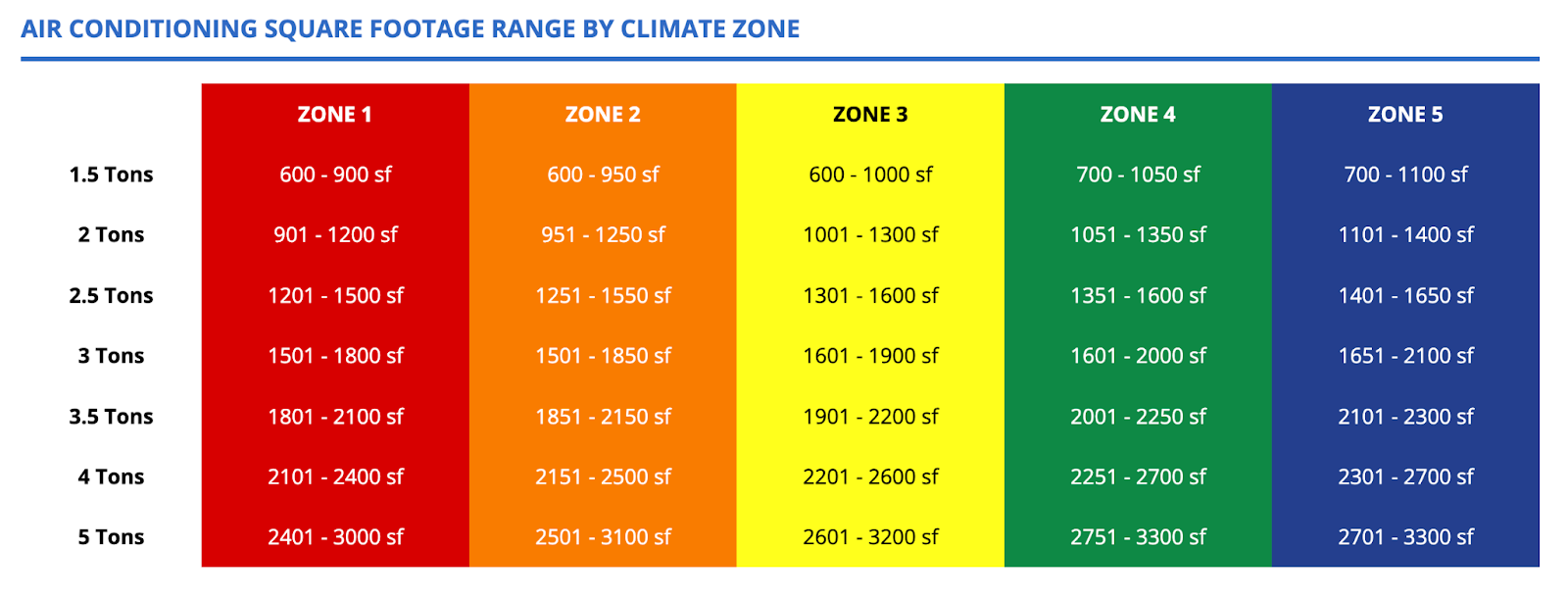
Shop 3 Ton Package 1501 - 2100 SF options for residential heating and cooling projects that require a complete HVAC system. These packages combine major components such as an air conditioner condenser, evaporator coil and gas furnace, making it easier to shop for equipment intended to work together. Available systems may vary by furnace capacity, efficiency, cabinet size, refrigerant and other specifications. The 1,501 to 2,100 square-foot range can help narrow your search, but the final system size should be based on the actual heating and cooling needs of the home.
3 Ton HVAC Packages for Residential Applications
A 3 ton HVAC package refers to the nominal cooling capacity of the air conditioning system. The heating side is sized separately, which means two 3 ton systems can use different furnace capacities even though their cooling capacity is similar.
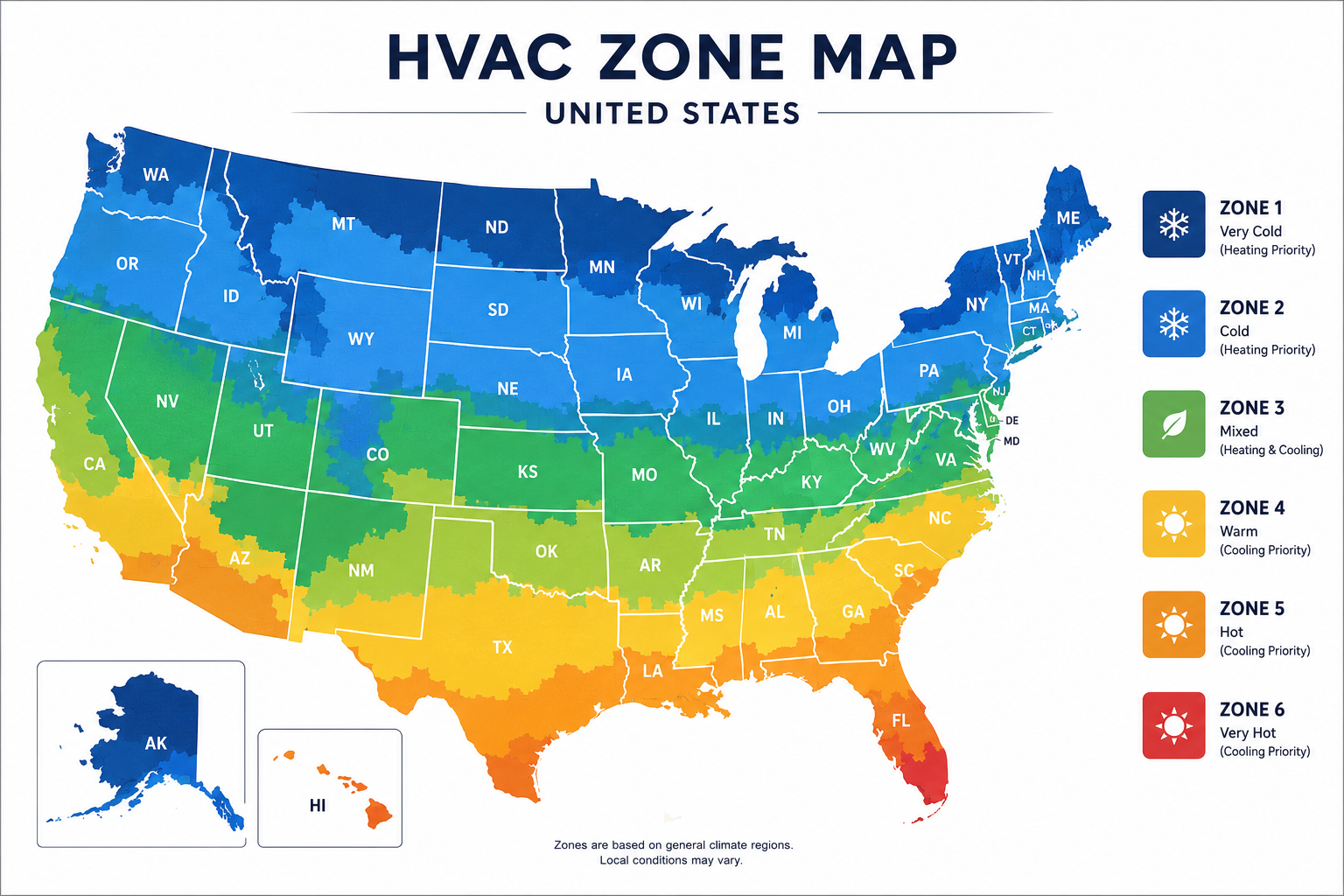
These systems are commonly used for full residential HVAC replacements and new installations. Square footage is useful for narrowing down possible equipment sizes, but it does not tell the whole story. Climate, insulation, windows, ceiling height, air leakage, sun exposure and duct conditions can all change how much heating and cooling a home actually needs.
Use the 1,501 to 2,100 SF range as an initial shopping guide. An HVAC contractor should calculate the home's load before the equipment is ordered.
Furnace AC Condenser and Evaporator Coil Packages
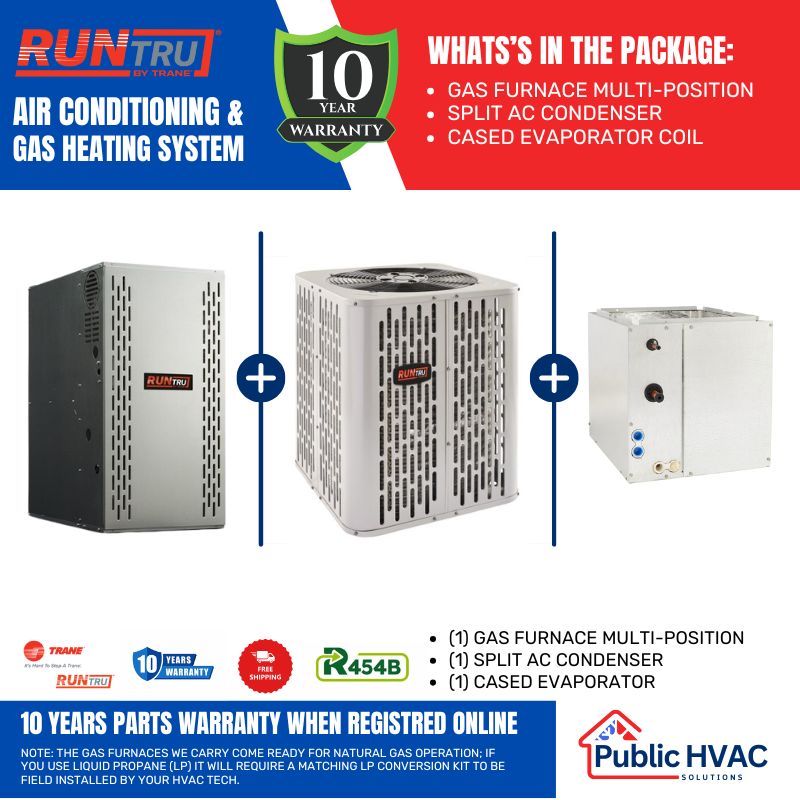
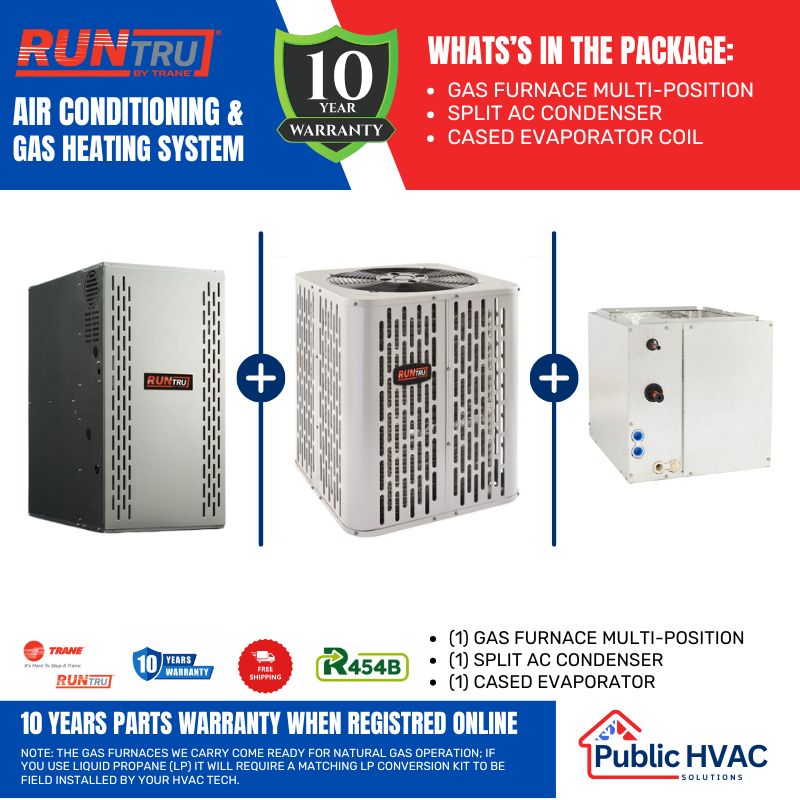
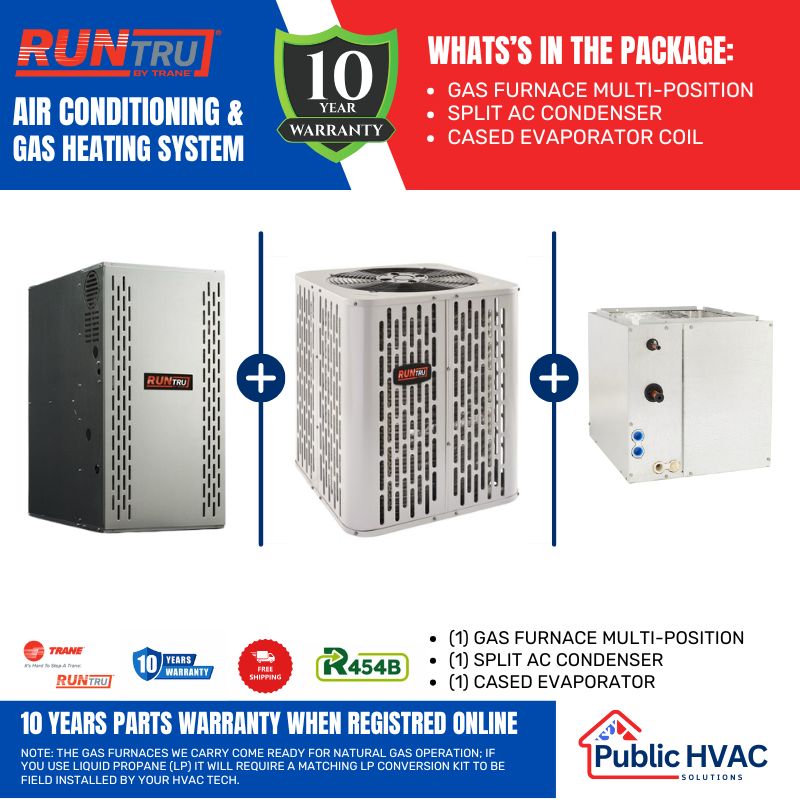
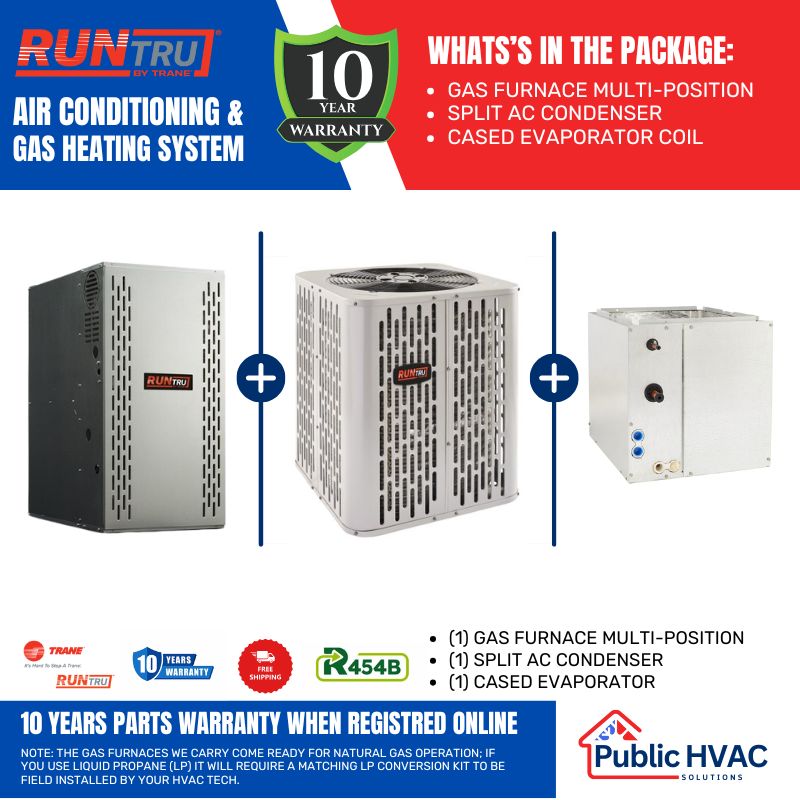
A complete split-system HVAC package brings together the main equipment used for central heating and cooling. The outdoor condenser handles the cooling cycle, the indoor evaporator coil transfers heat between the refrigerant and indoor air, and the furnace provides heat while circulating conditioned air through the duct system.
Purchasing these components together can simplify the process of finding equipment that belongs in the same system. Even within the 3 ton category, there can be meaningful differences in furnace capacity, cabinet width, efficiency, refrigerant, blower performance and coil configuration.
These systems are different from single packaged or rooftop units. A residential split system places the condenser outside while the furnace and coil are installed indoors. Buyers comparing other equipment configurations can also browse HVAC equipment available from Public HVAC Solutions.
What to Check Before Buying a 3 Ton HVAC Package
Tonnage is only one part of choosing a complete system. Review the equipment specifications along with the conditions of the existing installation before placing an order.
- Cooling capacity: Make sure a 3 ton system matches the home's calculated cooling load.
- Furnace capacity and efficiency: Heating requirements vary by climate and building construction, so not every 3 ton AC system needs the same furnace.
- Refrigerant: The condenser and evaporator coil must be suitable for the same refrigerant and system application.
- Coil and furnace dimensions: Cabinet width, orientation and available installation space matter, especially during replacement projects.
- Electrical requirements: Review the voltage, circuit requirements and electrical specifications listed for the equipment.
- Airflow and ductwork: Existing ductwork and blower performance need to support the system's airflow requirements.
- Equipment match: The condenser, coil and furnace should be an approved combination rather than components selected only because their nominal sizes appear compatible.
A qualified HVAC professional can review the building load, existing duct system and installation conditions before purchase. This is especially important when newer equipment is replacing an older system with different refrigerant, electrical or dimensional requirements.
Choosing a Complete 3 Ton Heating and Cooling System
A complete HVAC package makes the most sense when several major components are being replaced together. Shopping for equipment selected as a system can simplify the process compared with locating a condenser, coil and furnace separately.
For an existing home, the equipment also has to work with the installation that is already there. Ductwork, furnace venting, condensate drainage, electrical service, equipment location and available space can all influence which system will fit the project.
If only one component needs replacement, a complete package may not be necessary. Public HVAC Solutions also offers individual equipment and replacement options for projects that do not require a full system. The goal is to match the scope of the purchase to the condition of the existing HVAC system rather than replacing more equipment than the project requires.
3 Ton HVAC Packages Shipped Nationwide
Public HVAC Solutions ships HVAC equipment throughout the United States and Canada. Inventory and available configurations can change, so check each product listing for current specifications, pricing and availability before ordering.
Large HVAC equipment may ship by freight, and delivery requirements can vary based on the equipment and destination. Review the current shipping information for details about freight delivery, lift-gate service, order processing and equipment inspection before scheduling installation.
3 Ton Package 1501 - 2100 SF FAQs
Is a 3 ton HVAC system enough for a 2,000 square-foot house?
It may be, but square footage alone cannot determine the correct HVAC size. Two 2,000-square-foot homes can have very different heating and cooling loads depending on climate, insulation, window area, air leakage, ceiling height, shade and duct location. The 1,501 to 2,100 SF range is useful for narrowing down equipment choices, but it should not replace a residential load calculation. An HVAC contractor can determine whether a 3 ton system is appropriate for the specific home before equipment is purchased.
How many BTUs is a 3 ton air conditioner?
A nominal 3 ton air conditioning system provides approximately 36,000 BTU per hour of cooling capacity because one ton of cooling equals 12,000 BTU per hour. That figure applies to the cooling side of the system. Furnace heating capacity is rated separately, so a 3 ton AC system may be paired with different furnace sizes depending on the heating load and the approved equipment combination.
Should I replace the furnace coil and condenser at the same time?
Not always. If one component fails while the rest of the system is relatively new, a compatible replacement may be available without replacing everything. A complete system replacement becomes more practical when several components are aging, the existing equipment cannot be properly matched with newer components, or changes in refrigerant and equipment design make a partial replacement difficult. An HVAC professional can evaluate the furnace, evaporator coil, condenser and installation before recommending whether to replace one component or the complete system.